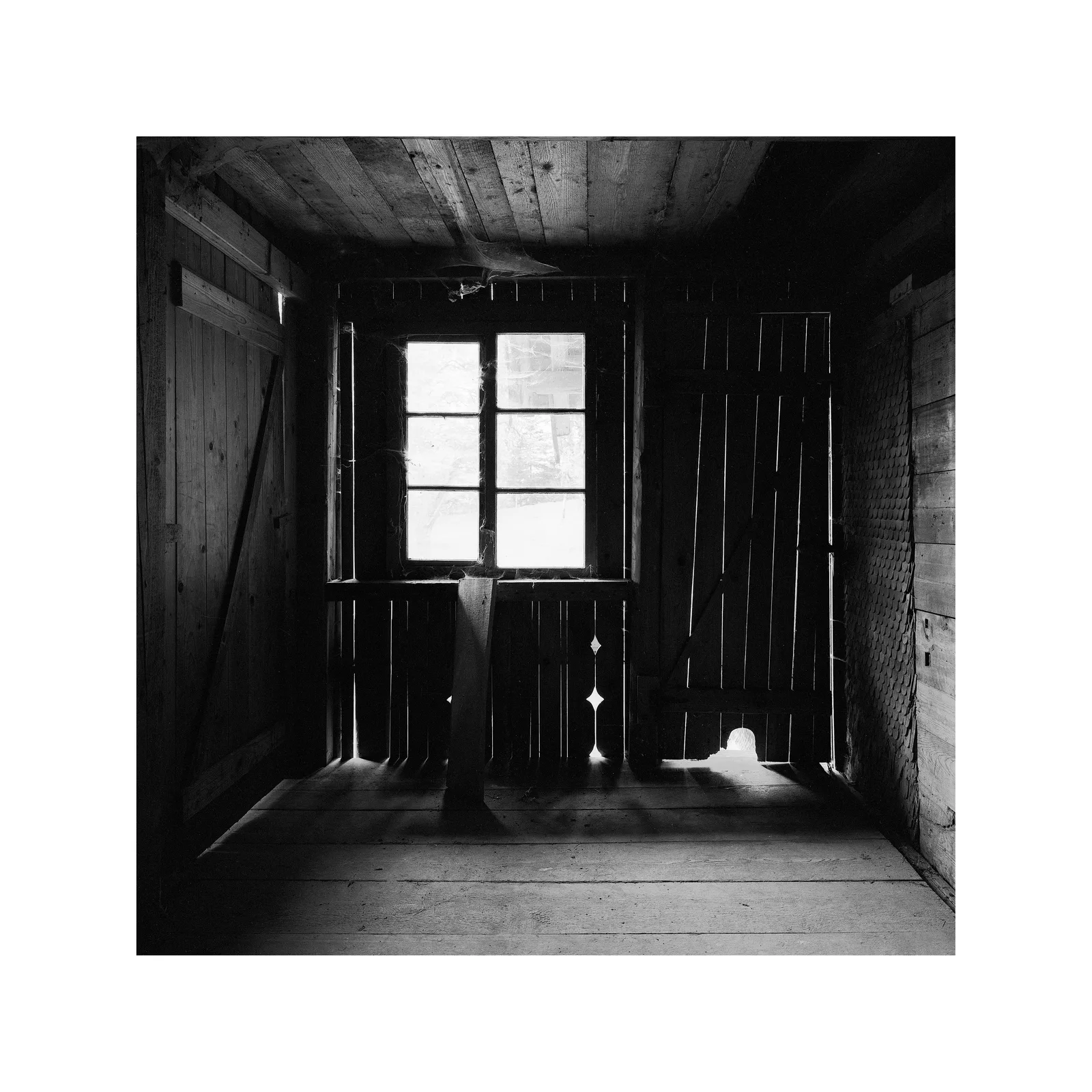
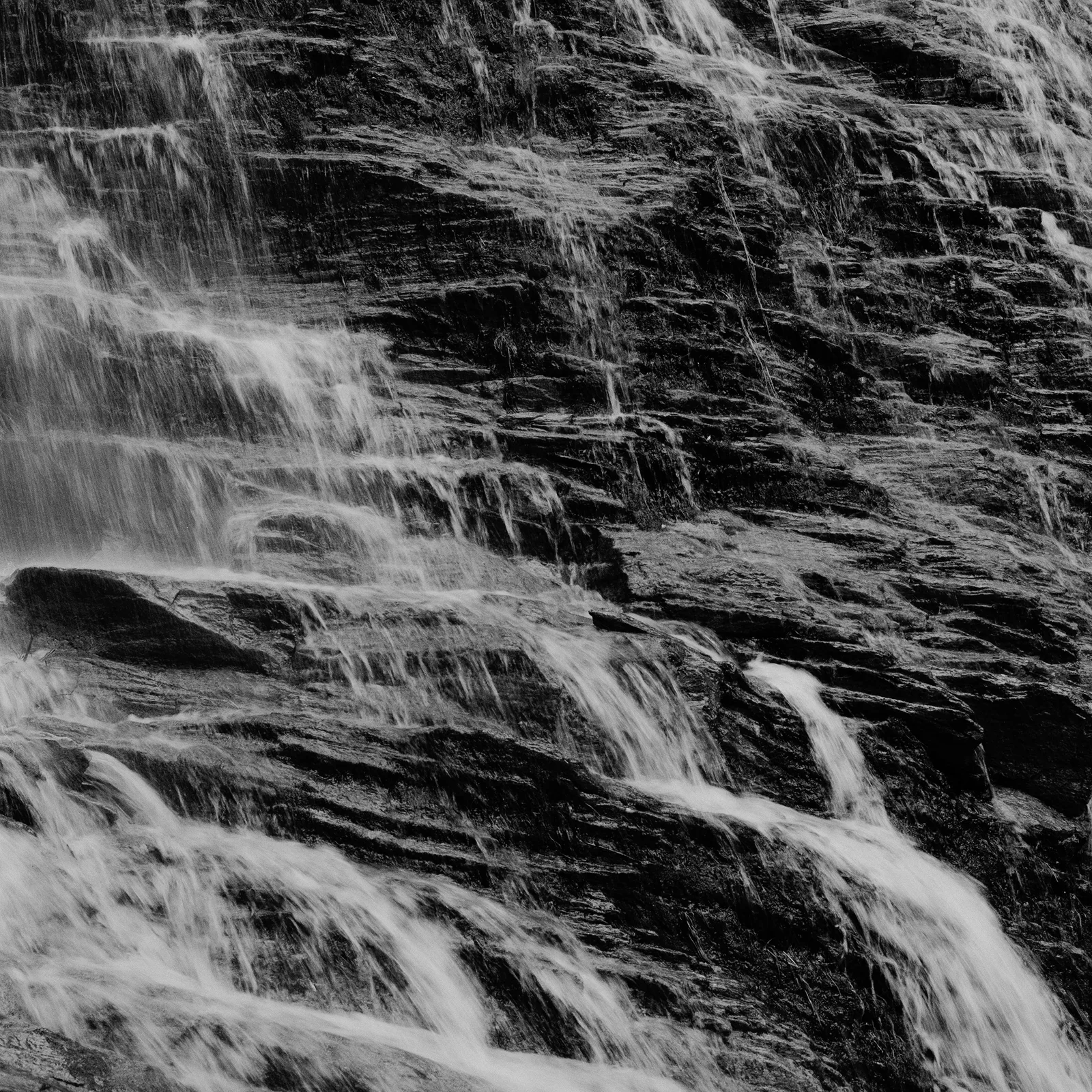
Stille ist ein tiefes Bedürfnis, das zum Luxus geworden ist. Diese seltenen Momente halte ich auf B&W Kleinbild-, Roll- und Planfilm fest und verbringe danach Stunden in der Dunkelkammer - Handarbeit von A bis fast Z. Meine Arbeiten wurden unter anderem in San Francisco, New York, London, Brüssel, Luxemburg, Zürich, Bern, Barcelona, Florenz, Bologna und Tokio gezeigt.
Serien
photoSCHWEIZ 2025
5 Bilder
Licht und Schatten, der Verzicht auf Farbe, die Reduktion auf ein oder zwei natürliche Elemente schaffen Memente, die uns an das erinnern, was wir verloren haben - Stille. Das ist der Rahmen, der meine Arbeit in einer zu lauten Welt begrenzt: „Nichts hat so sehr das Wesen des Menschen verändert wie der Verlust des Schweigens“ schrieb Max Picard im 1948 erschienen Buch „Die Welt des Schweigens“.
Ganze Arbeit ansehen
photoSCHWEIZ 2021
6 Bilder
The World is Darkening US novelist Jonathan Franzen wrote in “What If We Stopped Pretending?” (The New Yorker, 2019): “If you’re younger than sixty, you have a good chance of witnessing the radical destabilization of life on earth - massive crop failures, apocalyptic fires, imploding economies, epic flooding, hundreds of millions of refugees fleeing regions made uninhabitable by extreme heat or permanent drought.” In his book “On Time and Water,” Icelandic author Andri Magnason asks: If we are sensitive creatures and we know where we are heading, why don’t we stop? Instead of us finding an answer to his question, a virus stole our attention. Thomas L. Friedmann, an op columnist for the New York Times, wrote recently that “COVID-19 was supposed to be China’s Chernobyl. It’s ended up looking more like the West’s Waterloo.” The world is darkening - and I am afraid.
Ganze Arbeit ansehen
photoSCHWEIZ 2020
6 Bilder
Vanishing Silence David Strayer, a psychologist at the University of Utah, works among others on the human brains attention functions and the limits of multitasking, combining his research with brain recovery. In a National Geographic article, he explained the Three-Day Effect. The brain recovers best offline during a three-day period spent out in the wilderness. Every April, he takes his advanced psychology class out into the wild. The use of any phone equipment is discouraged. During these field trips, he tries to show his students the effect that nature has on the functions of the brain. During the days outdoors, Strayer measures the brain waves of his students with a portable electroencephalography (EEG) machine. Based on my non-scientific experiences, I agree with the conclusions he draws from his data. I feel best when everything I need in my life fits in my backpack.
Ganze Arbeit ansehen